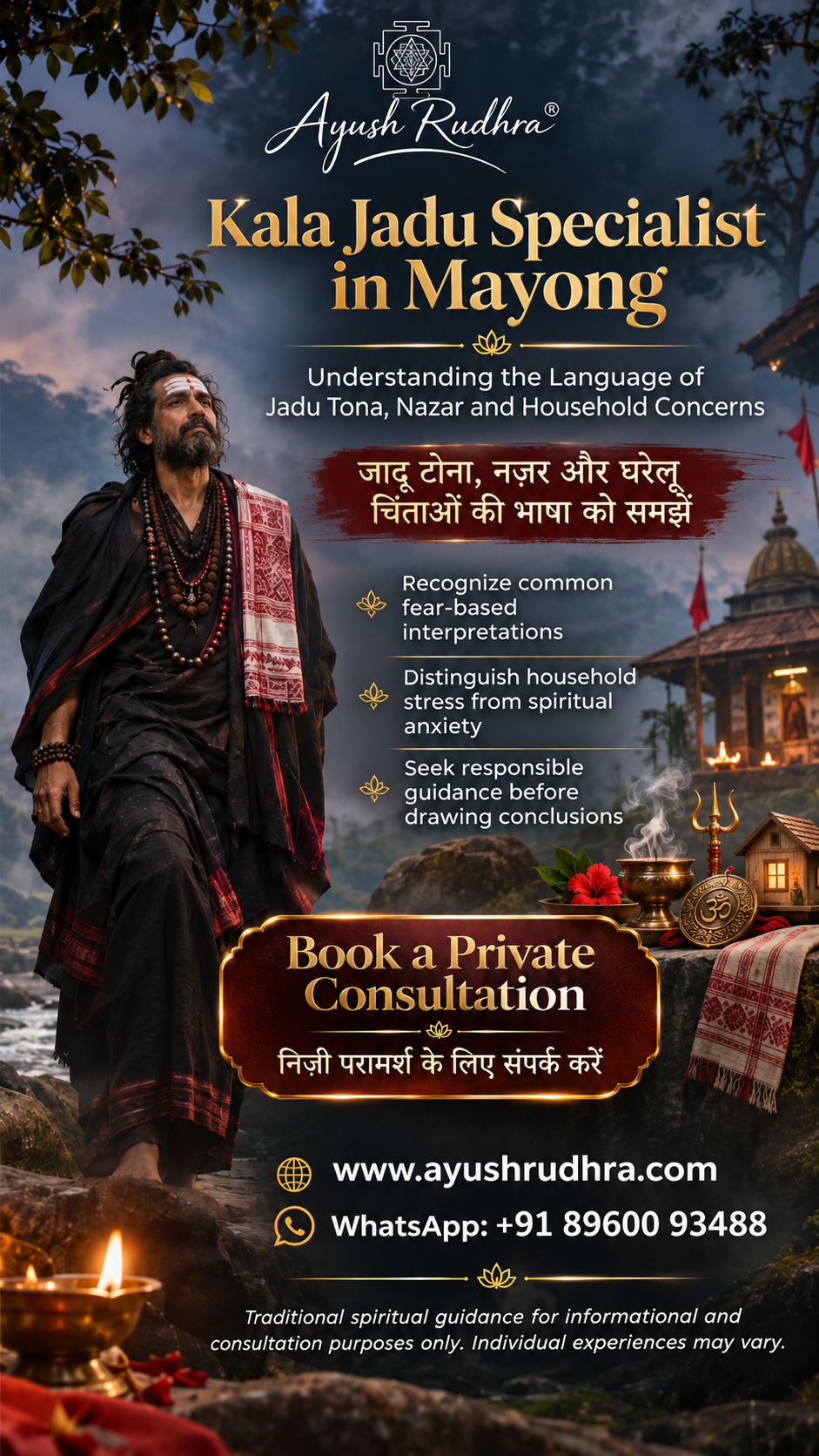
When a family searches for a kala jadu specialist in mayong, the words may carry meanings learned over several generations. One relative might use Kala Jadu to describe suspected intentional harm, while another says Nazar when a child is unsettled or a planned event goes badly. A third may use Jadu Tona as a general name for unfamiliar spiritual practices. In a household where several languages and regional traditions meet, these expressions are not always used consistently. The important starting point is to understand what the family means by the term, without accepting a supernatural explanation as established or treating a frightened person dismissively. This guide examines the vocabulary itself, the situations in which it is used and the practical conversation that can follow. It is not a method for diagnosing black magic or proving that another individual caused a problem.
Different words, different assumptions
Kala Jadu literally evokes the idea of dark or harmful magic in everyday Hindi usage, although individuals use the expression in different ways. Jadu Tona often functions as a broader colloquial term for magical practices or charms, and Nazar commonly refers to the idea that an envious or harmful gaze can bring misfortune. These descriptions concern cultural beliefs, not scientifically established mechanisms. The terms may overlap in ordinary speech but they are not standardized medical or investigative categories. When a family asks for advice, it helps to clarify whether someone is describing an event, expressing fear, reporting a threat or repeating another person’s interpretation. If a relative says there is Nazar in the household, ask what has happened that made them use that expression. The answer may reveal a concern about illness, privacy, gossip, tension or recent change. That specific concern can be addressed more effectively than the broad label alone.
How a household explanation can spread
Consider a hypothetical family in Assam that has recently moved into a new home. An appliance breaks, a child develops a fever, and an argument occurs about household spending. A relative links the events together and says that someone has cast Kala Jadu. The description gives the family a single narrative for several distressing situations. Other relatives begin repeating it, and the language becomes more definite each time. Yet the appliance could have an electrical problem, the child needs ordinary medical evaluation, and the spending argument may reflect real differences in the budget. The events deserve attention individually rather than being treated as proof of an invisible cause. A respectful family conversation can acknowledge that several setbacks feel overwhelming while avoiding the leap from coincidence to certainty. This is especially important when someone begins naming a neighbour or relative as the source of harm. Unfounded accusations can damage relationships and put innocent people in danger.
The relationship between cultural vocabulary and grief
People sometimes use spiritual language while trying to explain a loss that cannot easily be understood. After bereavement, a serious disappointment or an abrupt separation, a person may repeatedly revisit events and wonder whether something was done against them. Their distress is real even when the supernatural explanation is unverified. Listening carefully does not require agreeing with the proposed cause. A supportive response might acknowledge the loss, ask what practical help is needed today and encourage contact with an appropriate health professional if grief or fear is disrupting daily life. Avoid telling the person that the worry is proof of an attack, or that an additional ritual is required every time a memory returns. Cultural expressions can be part of how a family talks about sadness, but a spiritual label should not replace a discussion of sleep, safety, social support and necessary care. The distinction protects the person rather than criticizing their beliefs.
Why children should never be frightened by the label
A child who overhears adults discussing a curse may not be able to distinguish a traditional expression from an immediate threat. If adults attribute a child’s fever or difficulty at school to malicious magic, the child can become worried about ordinary objects, relatives or unfamiliar people. Caregivers should respond calmly, arrange appropriate medical or educational support and avoid involving children in frightening narratives. A family may have a customary prayer or harmless devotional routine that provides comfort, but it should not be imposed through fear or treated as a substitute for treatment. Objects, food or substances of unknown origin should not be administered to a child as a purported cure. If the child reports actual mistreatment or says someone has threatened them, take that information seriously and seek appropriate protection. Cultural sensitivity means recognizing the family’s vocabulary while giving the child’s welfare priority over speculative explanations.
Objects, gifts and the temptation to assign a hidden meaning
A household may discover a thread, packet, necklace or unfamiliar object near an entrance and wonder whether it is connected to Jadu Tona. The object does not by itself establish who placed it there or why. It might have an ordinary purpose, be discarded material or be part of a harmless custom. Avoid handling unknown powders, sharp objects or potentially hazardous material. Where an actual threat, trespass or suspicious package is involved, follow ordinary safety procedures and contact the relevant authority when appropriate. Do not burn unknown substances indoors or involve family members in hazardous attempts to neutralize them. It can be useful to record what was found and where, without attaching the identity of a suspected person. The focus is on the observable situation. A practitioner should not claim that a photograph conclusively reveals supernatural intent, and a stranger should not be given money to remove an alleged threat solely on the basis of such an assertion.
Using the terminology in a constructive family discussion
Families can reduce conflict by describing events in language that does not decide the cause in advance. Instead of stating that someone performed Kala Jadu, say that the family has experienced several setbacks and feels concerned. Instead of blaming a particular visitor for Nazar, describe what happened and ask whether anyone has a practical explanation. This approach does not require relatives to abandon religious beliefs. It gives every person an opportunity to speak without being accused. If household members disagree about whether to seek spiritual guidance, no one should be pressured to participate. Agree on actions everybody can accept, such as attending a medical appointment, reviewing a budget, repairing a lock or speaking with a counsellor. A family that can separate feelings from accusations is better placed to evaluate both traditional perspectives and real-world concerns. The goal is not to identify a hidden enemy; it is to restore safety and communication within the household.
Mayong’s regional context and modern service descriptions
The reputation of Mayong in Assam has made the phrase Kala Jadu familiar to many readers who know little about the region itself. Historical and cultural accounts of local spiritual practices should be understood in relation to their specific communities. They are not verification of an individual allegation. The academic discussion of healing and enchantment describes contemporary Mayong practitioners in a broader setting of social life and tourism. The Ayush Rudhra site’s linked Mayong Black Magic page discusses spiritual concerns within its advertised consultation scope. Readers can examine that information without assuming the organization can establish the supernatural cause of a household event. If a private conversation is desired, use official contact information, establish what the appointment includes and avoid promises of a guaranteed removal or diagnosis. Any guidance should remain consistent with the family’s consent, financial boundaries and the need to seek qualified help where appropriate.
When the label is used to threaten or extract money
An unsolicited message stating that a family is cursed unless money is sent should be treated as a potential threat or fraud, not as supernatural confirmation. Preserve relevant messages, transaction records and account identifiers if it is safe to do so. Contact the bank or payment provider promptly if money has been transferred under deceptive circumstances. The same caution applies when someone asks for private photographs or identity documents and threatens disclosure unless paid. Do not confront a suspected person based only on a spiritual interpretation. If there is an immediate danger, seek ordinary emergency assistance. In India, official cybercrime reporting channels can be used for appropriate online fraud or harassment concerns. A person who is persistently frightened by the possibility of a curse may also benefit from speaking with a trusted clinician. Such support can coexist with harmless personal religious practices. The strongest response to a frightening label is to address actual risks and protect the people affected.
Frequently asked questions
Are Kala Jadu and Nazar the same thing?
They can overlap in casual speech, but their cultural meanings differ. Neither term establishes a scientifically verified cause of illness, misfortune or relationship difficulties.
Can several setbacks prove that a household is affected by Jadu Tona?
No. Different events may have different explanations. Investigate practical causes and avoid inferring malicious intent from a sequence of coincidences.
What should a family do if a child is unwell?
Seek appropriate medical evaluation and reassure the child. Do not frighten the child with a curse allegation or administer an unknown substance as a remedy.
Can an unfamiliar object prove that someone intended harm?
No. Handle safety concerns appropriately and avoid accusations without evidence. A photograph cannot establish the object’s supernatural meaning or the identity of a responsible person.
Can a traditional consultation be part of a family conversation?
It may be approached as voluntary cultural or spiritual reflection, but it must not replace medical, legal or financial help or be presented as a guaranteed diagnosis or cure.