


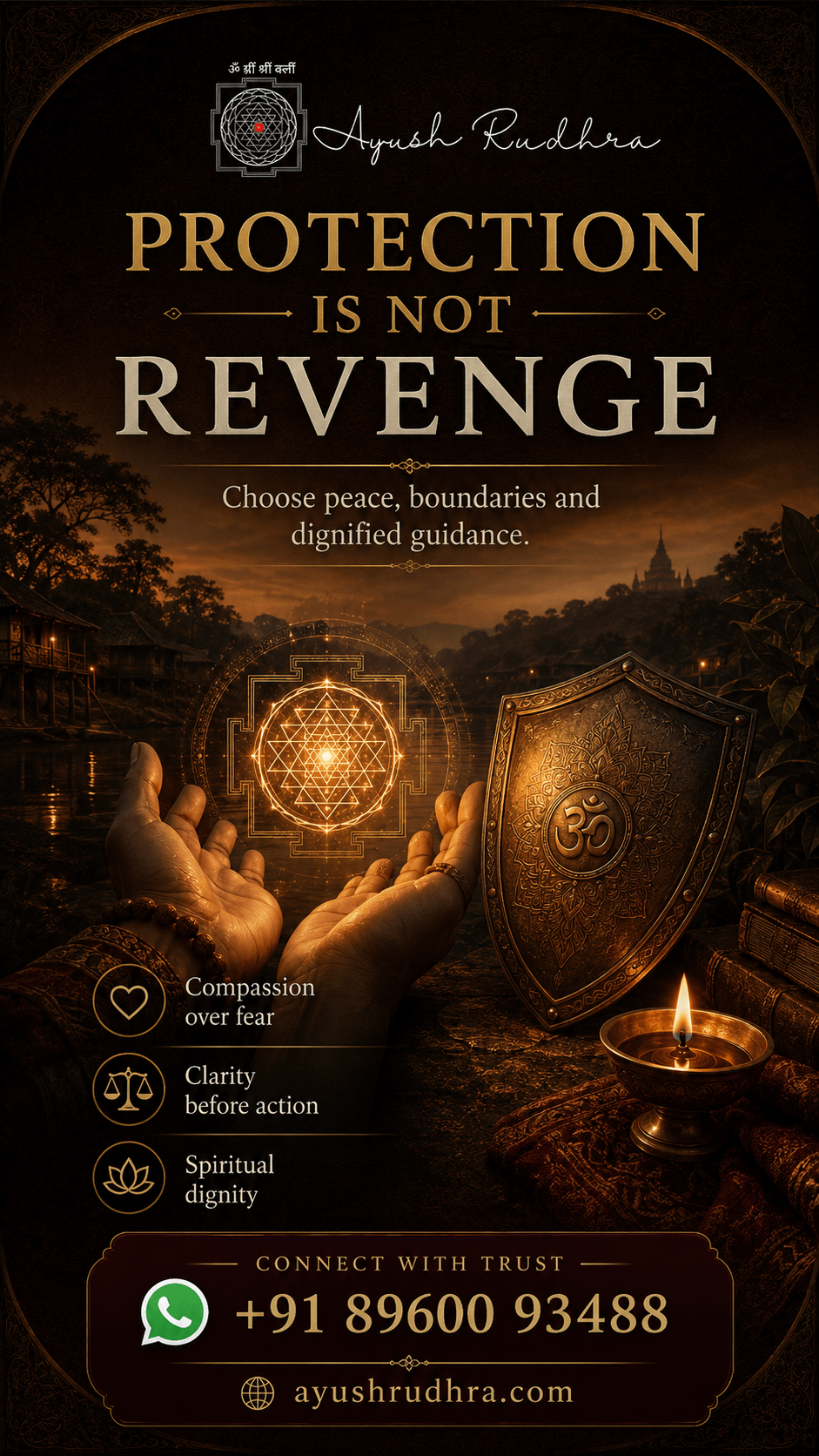
Protection is one of the most common reasons people explore tantric or spiritual guidance. They may feel vulnerable after conflict, illness, relationship breakdown or repeated setbacks. Ethical practice begins by understanding the person’s experience without confirming fear for commercial benefit.
Mayong’s public association with tantra gives the word powerful meaning, but that reputation must not be used to justify harmful, secretive or coercive instructions. Protection should improve clarity, conduct and boundaries. It should not create a new enemy or an obsession with unseen danger.
For a verified contact path and a calm explanation of consultation, readers can review the page on responsible Mayong spiritual guidance from Guru Ji Ayush Rudhra Ji.
Spiritual and astrology guidance may support clarity and discipline. It does not prove a supernatural cause, replace qualified professional care or guarantee a fixed result.
Protection Is Not Revenge
Protection-oriented guidance focuses on the seeker’s wellbeing, not punishment of another person. Prayer, mantra, meditation and ethical boundaries may help the client regain emotional balance.
Any practice designed to injure, coerce or frighten someone should be rejected. Revenge increases conflict and may create serious consequences.
Consent and Personal Agency
The client should understand what is being recommended and remain free to decline. Consent is not meaningful when it is obtained through threats of supernatural harm.
A practitioner should explain the purpose, duration, cost and expected role of the client. Clear information strengthens agency.
Non-Harm as a Minimum Standard
No spiritual service should require violence, cruelty, illegal substances or dangerous behaviour. Cultural vocabulary cannot excuse harm.
Safe practice respects people, animals, property and law. When an instruction feels unsafe, stop and seek another opinion.
Privacy and Confidentiality
Personal concerns, photographs and birth details should be handled carefully. The practitioner should collect only what is necessary and avoid public case discussion.
Clients should use verified channels and should not post sensitive details in comments. Confidentiality is a shared responsibility.
Practical Protection Measures
Spiritual practice should be accompanied by real safeguards: secure passwords, clear contracts, medical care, legal advice and physical safety planning where relevant.
These actions do not show weak faith. They show mature responsibility.
Clear Limits on Claims
An ethical practitioner cannot guarantee the removal of every problem, control another person or promise a fixed timeline. Results depend on many factors.
Honest limits build trust and reduce financial exploitation.
Affordable and Transparent Guidance
Fees should be stated before the service. Clients should not be pushed into repeated payments because a new threat is suddenly announced.
Charity or ritual materials should remain voluntary and proportionate. A spiritual path should not create unmanageable debt.
The Role of Discipline
Mantra and prayer often require consistency rather than dramatic intensity. A manageable daily routine can support focus and patience.
Discipline is measured by improved behaviour: calmer speech, better sleep routines and responsible action.
When Other Professionals Are Needed
Severe anxiety, medical symptoms, threats, legal disputes and financial crises require appropriate professionals. A practitioner should recognise these boundaries.
Spiritual support may continue alongside professional care, but it must not obstruct it.
How to Evaluate a Practitioner
Look for calm communication, verified identity, clear process, non-harm and respect for questions. Avoid anyone whose authority depends on keeping you frightened.
The client should leave with a practical plan and greater stability, not endless uncertainty.
Protection in Work and Business
A person who feels targeted at work should document assignments, feedback and access permissions. A business owner should review contracts, passwords, payment controls and confidential information. These measures often solve vulnerabilities that a ritual cannot address.
Spiritual practice may help the person remain calm while taking these steps. Protection becomes stronger when prayer and practical safeguards support each other.
Protection in Family and Relationships
In family conflict, protection may mean limiting sensitive information, setting respectful boundaries and refusing abusive communication. It does not require treating every disagreement as an attack.
Where there is violence or coercive control, safety planning and professional support are essential. A spiritual adviser should not ask the person to remain in danger.
A Transparent Remedy Plan
A written remedy plan should state the practice, duration, materials, cost and the client’s role. It should also explain that outcomes cannot be guaranteed.
Written clarity reduces misunderstanding and makes it easier to identify whether repeated additions are genuinely relevant or simply increasing dependency.
The Difference Between Cleansing and Control
Cleansing language should refer to the seeker’s own space, routine, prayer and emotional condition. Control language aims to override another person’s choices. The second approach raises ethical concerns and can encourage obsession.
A responsible practitioner makes this distinction explicit. Spiritual support may help a client communicate better or release unhealthy attachment, but it cannot ethically promise another person’s obedience.
Protection for People Experiencing Harassment
When there is documented harassment, stalking, workplace retaliation or threats, spiritual practice is only one layer. Preserve evidence, tell trusted people, improve physical and digital security and use appropriate official channels.
Do not confront a threatening person based solely on a spiritual reading. Safety planning should be based on observable behaviour and professional advice.
How a Practitioner Should Communicate Uncertainty
Uncertainty is not weakness. A mature practitioner can say that a concern may have spiritual, emotional and practical dimensions and that more information is needed.
This approach prevents the client from building major decisions around an unverified claim. It also leaves room for medical, psychological, legal or financial explanations.
When Protection Guidance Should Be Reassessed
Reassess the plan if it increases conflict, requires secrecy from trusted professionals or consumes money needed for essentials. A protective practice should not make the client less safe in ordinary life.
Ask whether a simpler prayer routine, stronger practical boundary or professional intervention would better address the current concern.
A Simple Daily Protection Routine
Choose a short prayer, five minutes of quiet breathing and one practical boundary to follow each day. The routine should fit normal work and family life rather than demand constant attention.
Review it after two weeks. If the routine supports calmness and better choices, continue; if it increases fear or compulsive behaviour, simplify it and seek appropriate guidance.
A Practical Consultation Preparation Note
Before discussing Mayong tantra protection guidance, prepare a short factual timeline, accurate birth details where available and three questions you want answered. This keeps the consultation focused and reduces the chance that fear or urgency controls the conversation.
After the session, write down the recommendations and identify which actions are spiritual, which are personal habits and which require another professional. This simple separation protects both the seeker and the practitioner from unrealistic expectations.
Maintaining Balance During the Guidance Process
Continue normal responsibilities while seeking guidance. Regular sleep, meals, work, communication and professional appointments protect decision-making. A spiritual concern can feel urgent, but abandoning daily structure often increases fear and dependence.
Set a reasonable time for prayer, reflection and follow-up. Avoid checking for signs throughout the day. The quality of guidance is better judged by improved calmness, responsibility and clarity than by constant interpretation of ordinary events.
Questions a Responsible Practitioner Should Welcome
A seeker should be able to ask what the consultation includes, how information is used, what the limits are and whether another professional should be involved. Calm answers are a sign of a mature process. Refusal to explain, combined with threats or urgent payment demands, should be treated cautiously.
Questions do not weaken spiritual respect. They allow informed participation and reduce misunderstanding. The practitioner and client both benefit when expectations are recorded clearly before any follow-up service begins.
How to Measure Whether Guidance Is Helping
Measure progress through daily function: sleep, concentration, communication, ability to work and willingness to follow practical advice. A helpful process usually reduces panic and creates a clearer routine, even when the external problem takes time to resolve.
If the person becomes more frightened, isolated or financially dependent, pause and reassess the guidance. Support should increase agency rather than make normal decisions impossible without repeated approval.
Protection Guidance Should Produce Observable Boundaries
A protection consultation should lead to practical boundaries: reduced exposure to abusive communication, secure documents, controlled access to accounts and a manageable daily spiritual routine. These outcomes can be observed even when spiritual beliefs are personal.
When a service offers only escalating ritual language without any clearer boundary or action, the client should ask what measurable improvement the process is intended to support.
Consent Applies to Every Additional Service
Consent to an initial consultation is not automatic consent to a puja, Anushthan, photograph use or follow-up payment. Each service should be explained separately with purpose, cost and duration.
This standard respects both spiritual tradition and modern consumer dignity. It also reduces disputes caused by assumptions.
Responsible Action Checklist
- Choose protection, not revenge.
- Ask for clear explanation and fees.
- Refuse harmful or illegal instructions.
- Protect private information.
- Keep practical safeguards active.
- Reject guaranteed control or fixed results.
Frequently Asked Questions
Is tantra always connected with harmful practice?
No. Traditions are diverse, but any modern service should still meet non-harm, consent and legal standards.
What can protection guidance include?
It may include prayer, mantra, meditation, disciplined routine and practical boundaries.
Can a practitioner guarantee protection from every problem?
No. Responsible guidance states limits and does not promise absolute control.
Should legal or medical care continue?
Yes. Spiritual guidance should not replace qualified care.
Final Perspective
Ethical protection guidance is calm, transparent and non-harmful. It returns responsibility to the seeker and works beside practical action. The more powerful the tradition sounds, the more important clear limits become.
Contact and Consultation
For private guidance from Tantrik Ayush Rudhra Ji, contact +91 89600 93488. Use the official website and verified channels before sharing personal details.
Disclaimer: This article is for spiritual, cultural and general informational guidance. It does not replace medical, psychological, legal, financial or emergency professional advice. No guaranteed result, diagnosis of black magic or control over another person is claimed.
